
AI Workflow Automation
What Is AI Workflow Automation? A Complete Guide for Businesses
AI workflow automation defined
Traditional automation
Traditional automation follows fixed rules and performs predefined actions. It works best when inputs are predictable and the workflow rarely changes.
- •Rule-based triggers
- •Rigid conditions
- •Limited context awareness
- •Breaks when inputs vary
AI workflow automation
AI workflow automation can interpret information inside the workflow. It helps the system handle variation while still operating within structured boundaries.
- •Context-aware classification
- •Summarization and extraction
- •Decision-support logic
- •Structured human review points
A practical example: lead intake
Example 01
Lead intake and qualification
Business Type
A service business receiving leads through a website form, email inbox, referral notes, and social messages.
Problem
The owner spends time reading every inquiry, deciding what the customer needs, checking whether the lead is qualified, and remembering who needs follow-up.
Before
Messages arrive in multiple places. Details are copied manually into a spreadsheet or CRM. Follow-up depends on memory, inbox discipline, or a manual task list.
After
The workflow captures each inquiry, AI summarizes the customer need, classifies the request type, flags missing information, and routes the lead to the correct follow-up path.
Expected Outcome
Faster response time, cleaner qualification, fewer missed leads, and less manual sorting around revenue-generating work.
LuxNovare Lens
Where AI workflow automation creates value
Good automation candidates
A workflow is a strong AI automation candidate when it repeats often and follows a recognizable pattern.
- •Lead intake and qualification
- •Document review and summarization
- •Customer onboarding steps
- •Weekly reporting and visibility
Weak automation candidates
A workflow is a weak candidate when the business has not clarified what should happen, who owns it, or how decisions should be made.
- •Undefined approval paths
- •Unclear business rules
- •Messy intake with no standard fields
- •Processes no one has mapped
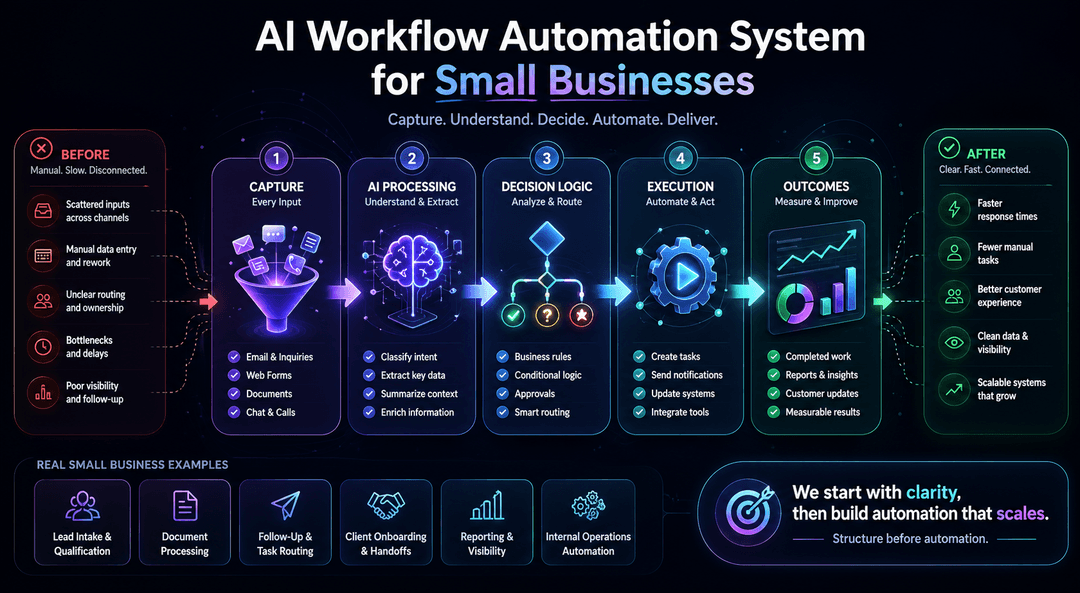
How AI workflow automation works
Implementation framework
Proof architecture: what structured automation changes
Verified System Proof
Structured workflows reduce operational drag.
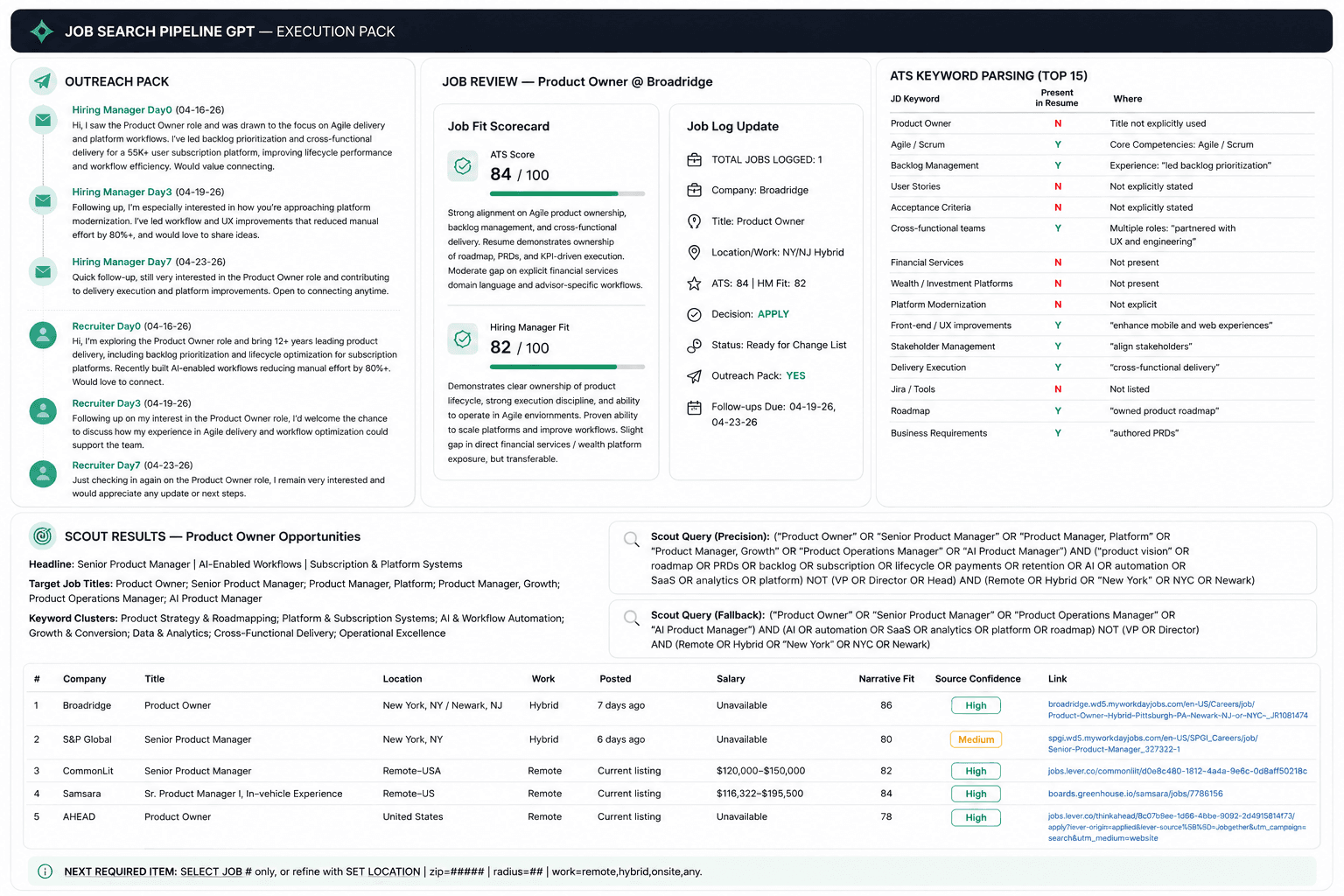
The strongest proof inside the current LuxNovare system library comes from repeated workflow redesign: taking scattered manual execution and converting it into a controlled operating path.
3 hrs → 30 min
Workflow compression
Verified Job Search Pipeline GPT case-study result.
84 / 100
ATS score example
Structured scoring layer used inside the execution workflow.
82 / 100
Hiring manager fit
Example decision-support score from the workflow system.
Before / After
From scattered manual effort to structured execution
Before
- •Work spread across inboxes, tabs, notes, and spreadsheets
- •Manual review repeated every cycle
- •Follow-up dependent on memory
- •Status visibility created after the fact
After
- •Inputs captured into a defined workflow
- •AI-assisted classification and summarization
- •Decision logic and review points structured upfront
- •Execution visibility built into the operating system
Case-study proof: structured systems beat scattered work
Related LuxNovare System
Job Search Pipeline GPT
A deterministic workflow system that turned repeated job-search execution work into a structured pipeline for intake, scoring, packaging, execution, and tracking.
Workflow Compression
3 hrs → 30 min
Related LuxNovare System
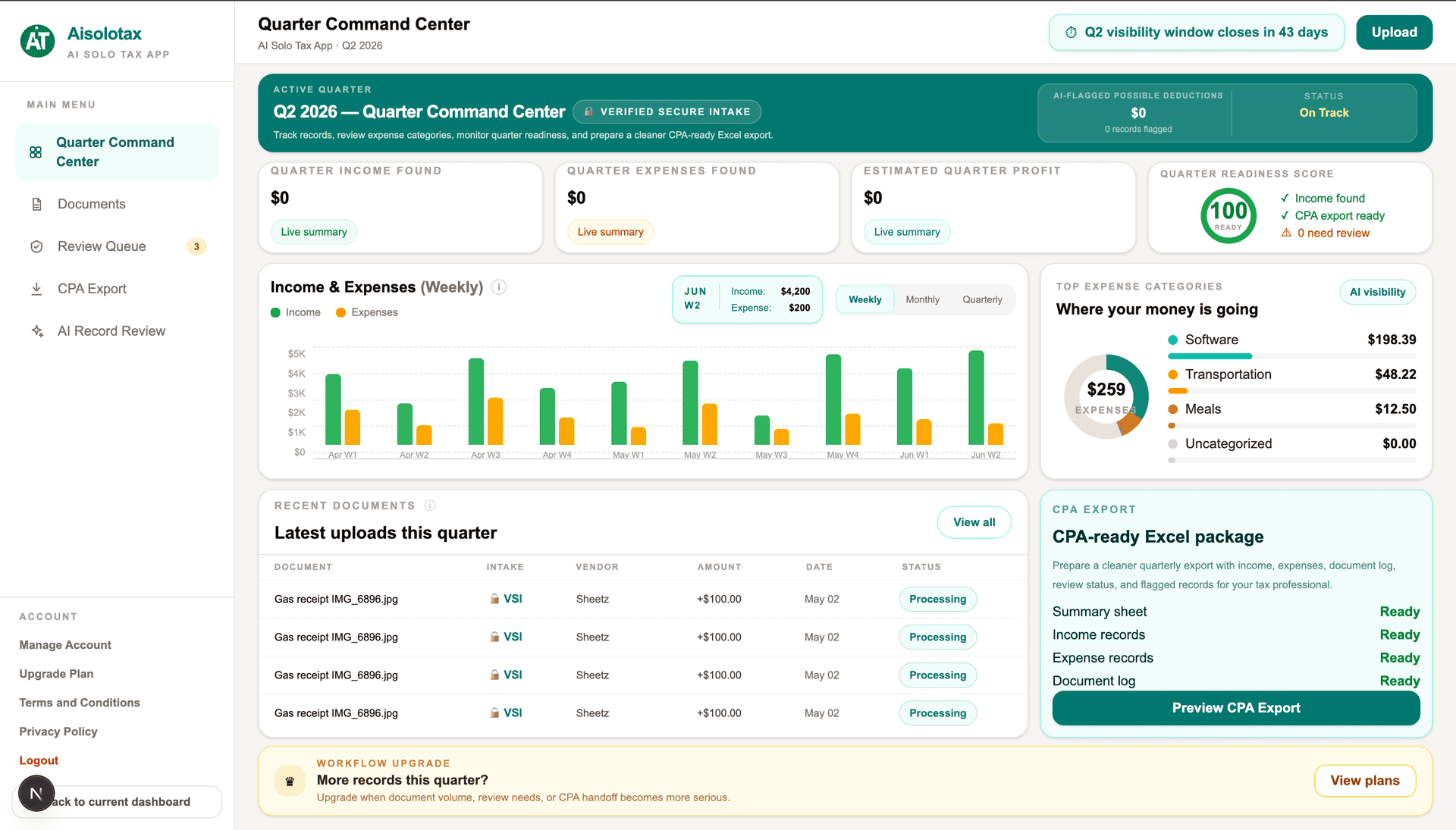
Aisolotax
An AI-assisted operational workflow platform designed around structured intake, document organization, review visibility, and SaaS workflow architecture for independent-worker tax visibility.
System Type
Live SaaS
When should a business implement AI workflow automation?

Author
Jose Aguilar
Jose Aguilar is the founder of LuxNovare. He focuses on AI-assisted workflow systems, operational architecture, product execution, subscription platforms, and scalable business process design.
Published by LuxNovare · Workflow Systems & AI Execution
Continue Exploring
Related workflow systems and services.
Workflow analyzer
Describe your workflow and get instant automation ideas.
Add a short description of a slow, repetitive, or inconsistent workflow. The analyzer will identify likely friction points and where automation can help.
Frequently asked questions
What is AI workflow automation?
AI workflow automation is the use of artificial intelligence inside structured business workflows to classify information, summarize inputs, route work, support decisions, and reduce repetitive manual effort.
What is the difference between AI automation and traditional automation?
Traditional automation follows fixed rules. AI workflow automation can interpret variable inputs, summarize context, classify information, and support decisions inside a defined workflow.
Can small businesses use AI workflow automation?
Yes. Small businesses often benefit from AI workflow automation when it is applied to repeated work such as lead intake, document review, follow-up, customer onboarding, reporting, and task routing.
Continue Reading
Related workflow automation guides.
AI Workflow Automation Examples for Small Businesses
Practical examples of automation applied to real workflows.

How AI Workflow Automation Improves Business Efficiency
How automation improves handoffs, intake, and operating visibility.
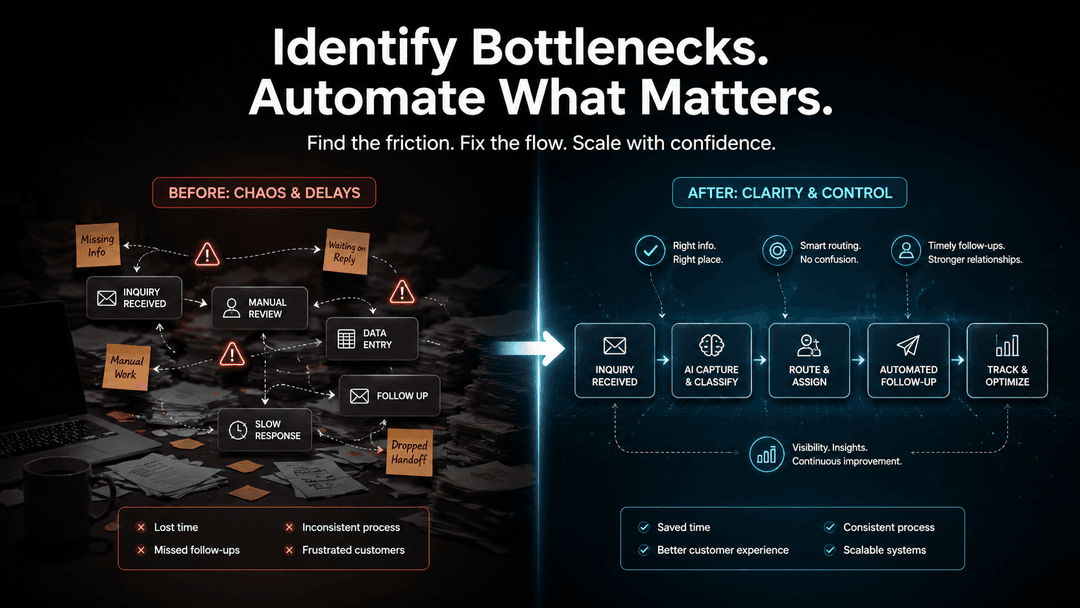
How to Identify Workflow Bottlenecks Before Automating
Find the friction before building automation.
Ready to turn your workflow into a system?
LuxNovare designs AI workflow automation systems that reduce manual work, improve clarity, and create measurable business value.